Works by Mark and Roman Khidekel on display at the Heller Museum :Proverbs, Adages, and Maxims
Event Venue:
Heller Museum, 1 W 4th St, New York, NY 10012 August 18, 2025 – June 24, 2026,Event Date:
OPENING RECEPTION October 16, 2025, 5:00-7:00PM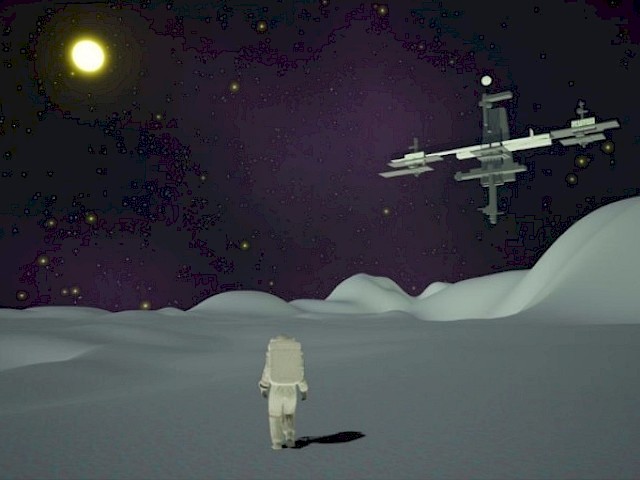

These two images are made in different techniques, one with a pencil, in graphics and animation, emotionally and semantically connected. Everything moves, travels parallel and merges with the next and the next and ads up to an infinite number.
Moon landscape animation as a stage of movement, a walk on the Moon.
In the Jewish consciousness, we are the children of God, who created the Moon, above the Moon, a Suprematist composition, a Suprematist structure for transplantation into more distant paths and travels.
In graphics and pencil, an illustration after a lunar hike, an illustration of the energy of space, calling further, even further, very far away.
Between the two images, there are stages known in the history of art.
This is a lunar landscape snatched from photorealism, made in a new mussel, and the Suprematist composition provoked by this above the surface.
Unknown space is graphics, pencil. Where you can see the lines of force of energy clots and the emerging forms of objects that were recognizable, but transformed under the influence of an energy substance unknown to us.
These two pictures should be together as antipodes, pluses and minuses, while illustrating one idea here.
We, as artists, creators, are the continuers and keepers of one of the most orthodox and influential phenomena of the Eastern European Avant-garde, which was largely Jewish, that influenced our Civilization.
This phenomenon, which was created by Malevich, Lissitzky and Khidekel, is called Suprematism, and it largely anticipated computer graphics.
And in general, the ideas themselves and new mussels, philosophically arose back in the twenties of the last century. And our creativity, it does not necessarily have to follow the harmonious rules of minimalism, but the meaning of the image on the plane of the sheet as an endless space fascinates us and makes us create cosmic fantasies.
Curator Phyllis Freedman notes, “Their works encourage us to deepen our understanding of the world and others, and to reflect on our own self-perception of our identities and values. From admonitions to consoling commentaries on the vagaries of life, they impart wisdom, empathy, hope, and healing.”
Every culture offers traditional sayings that articulate a perceived truth based on common sense or human experience. From the Book of Proverbs and Ecclesiastes in the Hebrew Bible, Abraham Joshua Heschel’s philosophical writings, Sephardic and Judaeo-Arabic popular dictums, and Yiddish adages, to old English and Chinese aphorisms and African folk axioms, there is an abundance of poetry and profound or wittily succinct statements that provide insights into human nature and guidance for a moral and righteous existence.
Fifty-five artists of diverse backgrounds offer visual interpretations of familiar sayings and worthy shorthand advice. Ranging from representational to abstract approaches and a broad range of mediums, their art applies age-old maxims to explore interpersonal relationships, environmental concerns, gender stereotypes, Holocaust remembrance, and the impact of trauma on the human psyche.
Heller Museum at Hebrew Union College
Location: One West Fourth Street, New York
On View: August 18, 2025 – June 24, 2026
Hours: Monday through Thursday, 9 a.m. – 6:30 p.m.
Admission: FreeTours
Information: 212-824-2218; hellermuseum@huc.eduExhibition
Free Heller Museum exhibition audio guide at bloombergconnects.org
Mark Khidekel khidekelstudio@aol.com, 917 402 7897
https://www.khidekel-architect.com
http://www.khidekel-art-design.com/
Roman Khidekel rmkhidekel@aol.com 646=270 8448